Roofing companies need a steady flow of qualified leads to keep their crews busy and their businesses growing. Referrals and repeat customers can provide valuable work, but they may not always deliver enough opportunities to meet monthly revenue goals. Paid advertising gives roofing contractors another way to reach homeowners and property managers who need roofing services.
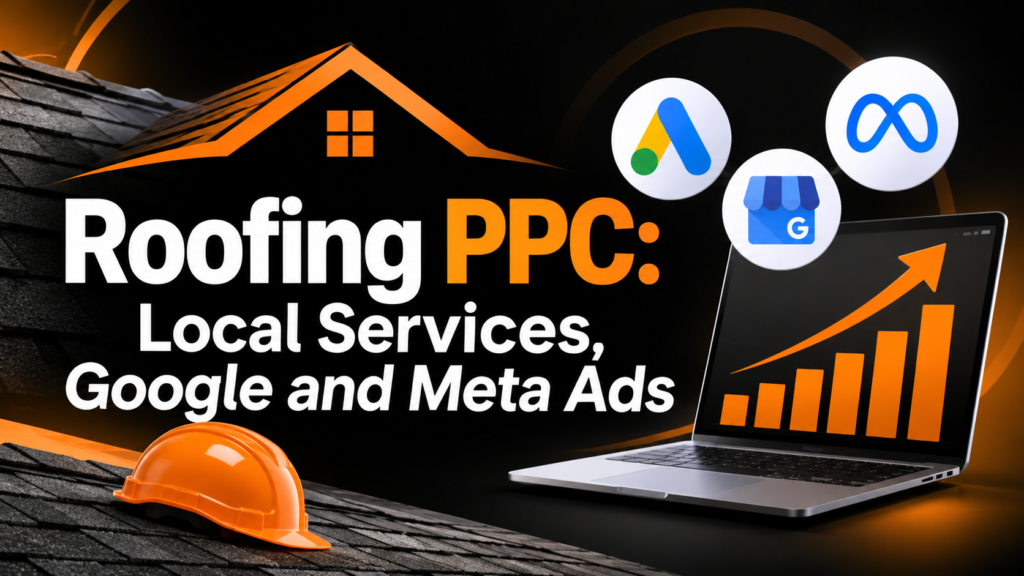
Roofing PPC uses paid advertising platforms to put a roofing business in front of potential customers. These platforms include Google Local Services Ads, Google Search Ads, and Meta Ads on Facebook and Instagram. Each channel works differently. Some connect contractors with people actively searching for a roofer, while others help businesses reach homeowners who may need roofing work in the future.
The right advertising strategy depends on more than clicks and impressions. Roofing companies should consider the cost of each qualified lead, the number of inspections booked, the percentage of estimates that become signed contracts, and the profit generated by completed jobs.
A campaign that produces many inexpensive leads is not automatically successful. A smaller campaign that generates fewer but better-qualified appointments may deliver a stronger return.
This guide explains how roofing contractors can use Local Services Ads, Google Search Ads, and Meta advertising. It also covers budgeting, lead quality, campaign management, conversion tracking, and ways to measure performance based on booked roofing jobs.
What Is Roofing PPC?
Roofing PPC is a paid advertising strategy that helps roofing contractors attract potential customers through online advertising platforms. PPC stands for pay per click, which means advertisers generally pay when someone clicks their ad. However, not every paid advertising format uses this exact pricing model.
For example, Google Search Ads commonly charge advertisers for clicks, while Google Local Services Ads generally charge for eligible leads. Meta campaigns can use different bidding and billing models depending on the campaign objective.
The main goal is to connect roofing businesses with people who may need services such as:
- Roof replacement
- Roof installation
- Roof inspections
- Roof leak services
- Storm damage assessments
- Shingle roofing
- Metal roofing
- Commercial roofing
- Gutter and exterior services
A homeowner searching for a roof replacement contractor has a different level of buying intent from someone scrolling through Facebook and watching home improvement videos. A successful campaign considers these differences and uses the right advertising channel for each audience.
How Pay-Per-Click Roofing Advertising Works
Most paid search campaigns follow a straightforward process:
- A roofing company selects the services and locations it wants to advertise.
- The advertising platform identifies relevant searches or audiences.
- The business creates advertisements with suitable messages and calls to action.
- Potential customers see the ads and click, call, or submit their information.
- The roofing company contacts those prospects and attempts to schedule inspections or estimates.
- The business tracks which inquiries become booked appointments and signed jobs.
The advertiser pays according to the platform’s billing model, even if the person who clicks does not eventually hire the company.
That is why campaign management should focus on more than generating website traffic. The objective is to attract the right prospects and turn advertising spend into profitable work.
The Three Main Channels for Roofing Advertising
Roofing companies can use several advertising platforms, but three options deserve particular attention: Local Services Ads, Google Search Ads, and Meta Ads.
Each platform reaches customers at a different stage of the buying journey.
1. Google Local Services Ads
Google Local Services Ads appear prominently in relevant local search results. They help homeowners connect with service providers when they are looking for a particular type of contractor.
For eligible businesses, the format can display information such as:
- Business name
- Customer reviews
- Service categories
- Service areas
- Contact options
- Google verification information, where applicable
Unlike standard search advertising, Local Services Ads generally operate on a pay-per-lead model. Businesses pay for eligible customer contacts rather than every website click.
Google explains its Local Services Ads program and the screening process businesses must complete.
Why Local Services Ads Can Work for Roofers
Local Services Ads can be useful because they reach people who are already searching for a service.
For example, someone searching for a roofing contractor in their city may be ready to request an inspection or compare estimates. Appearing prominently can help a roofing company enter that consideration process.
Other benefits include:
- Visibility in relevant local searches.
- Direct phone and message inquiries.
- A profile that displays customer reviews.
- A lead-based payment model.
- Opportunities to build confidence through Google’s verification process.
These features can make LSAs a valuable part of a local roofing advertising strategy.
Eligibility and Verification Requirements
Not every roofing company can immediately start advertising through Local Services Ads.
Google’s screening requirements vary by business category and location. They may include business registration, licensing, insurance, background checks, and other verification steps.
Roofing contractors should confirm their eligibility before planning their advertising budget around this channel.
Businesses should also keep their profile information accurate. Service areas, business hours, contact details, and offered services should reflect what the company can actually provide.
How to Improve Local Services Ads Performance
A complete profile is an important starting point, but lead management also matters.
Roofing companies should:
- Keep business information accurate and updated.
- Select relevant roofing service categories.
- Maintain a strong review profile through genuine customer feedback.
- Respond to calls and messages promptly.
- Monitor the relevance of incoming leads.
- Review lead charges and dispute eligible issues through the appropriate platform process.
- Keep service areas aligned with actual operating coverage.
A roofing company that regularly misses calls may lose opportunities even when its profile receives good visibility.
2. Google Search Ads for Roofers
Google Search Ads help roofing businesses appear when people search for relevant services.
For example, a contractor could advertise for searches such as:
- Roof replacement company near me
- Roofing contractor in Austin
- New roof installation
- Residential roofing estimate
- Commercial roofing contractor
- Roof inspection services
This channel is especially useful for reaching people who are actively researching or looking for roofing services.
How Google Search Advertising Works
Google Search Ads operate through an advertising auction. Advertisers select keywords, create ads, set budgets, and choose bidding strategies.
When someone searches for a relevant term, Google determines which eligible advertisements may appear and in what positions.
The result depends on several factors, including the advertiser’s bid, ad relevance, landing page experience, and the context of the search.
A higher bid does not guarantee the best advertising position. The overall quality and relevance of the campaign also matter.
Organize Campaigns by Roofing Service
One common mistake is placing every roofing service into a single advertising campaign.
Different services attract customers with different needs. Someone looking for a roof replacement may want to compare materials, warranties, financing, and project timelines. Someone dealing with an active leak may want to contact a contractor quickly.
Separate campaigns or tightly organized ad groups can make it easier to control budgets and messaging.
Consider these campaign categories:
Roof replacement campaigns
Target homeowners researching full roof replacement, new roofing systems, and installation estimates.
Roof inspection campaigns
Reach property owners looking for professional assessments of their roofing systems.
Storm damage campaigns
Target relevant searches from property owners looking for inspections after severe weather.
Commercial roofing campaigns
Reach building owners, property managers, and commercial decision-makers searching for roofing contractors.
This structure helps businesses connect each advertisement with the most relevant service page.
Choose Keywords Carefully
Keyword selection has a direct effect on campaign relevance.
Useful keyword categories include:
- Service-based keywords
- Location-based keywords
- Roofing contractor keywords
- Replacement and installation keywords
- Inspection-related searches
- Commercial roofing searches
However, not every search containing the word roofing represents a potential customer.
For example, searches related to roofing jobs, salaries, training, DIY projects, and wholesale materials may attract people who are not looking to hire a contractor.
Negative keywords help prevent advertisements from appearing for irrelevant searches.
Roofing companies should review their search terms regularly and remove queries that generate unnecessary spending.
Create Ads That Match Customer Needs
A good search advertisement should explain the service, location, and next step.
For example:
Headline: Need a New Roof?
Description: Explore professional roof replacement options in your service area. Request an estimate from our team.
The message should be accurate and specific. Contractors should only advertise warranties, certifications, financing options, emergency availability, and other benefits they can genuinely provide.
A clear call to action can encourage interested homeowners to call or request an estimate.
3. Meta Ads for Roofing Companies
Meta Ads allow roofing companies to advertise on Facebook and Instagram.
Unlike search advertising, these campaigns do not depend entirely on someone actively searching for roofing services. Instead, businesses can reach selected audiences based on available targeting options, campaign objectives, and advertising signals.
This makes Meta useful for introducing a roofing company to homeowners, promoting educational content, and staying visible to people who have previously interacted with the business.
Why Roofing Companies Use Facebook and Instagram Ads
Many homeowners do not start looking for a roofer until they notice a problem or begin planning an exterior renovation.
Meta advertising gives contractors an opportunity to build awareness before that moment.
Potential campaign uses include:
- Promoting roofing services to local audiences.
- Sharing completed roofing projects.
- Introducing the company and its team.
- Promoting inspection or estimate offers.
- Educating homeowners about roofing concerns.
- Retargeting previous website visitors.
- Collecting inquiries through lead forms.
Visual content is especially valuable for roofing businesses. Before-and-after project photographs, videos, and customer-approved testimonials can help demonstrate workmanship and experience.
Facebook and Instagram Lead Ads
Meta Lead Ads allow people to submit their information through forms within the platform.
Depending on the campaign setup, businesses can use instant forms, website forms, calls, and messaging options.
A roofing lead form might request:
- Customer name
- Phone number
- Email address
- Property ZIP code
- Type of roofing service required
- Preferred contact time
The form should collect enough information to qualify the inquiry without making the process unnecessarily difficult.
For example, asking whether someone needs a roof inspection, replacement estimate, or commercial roofing consultation can help the sales team understand the request.
Meta provides documentation about Lead Ads.
Creative Ideas for Roofing Meta Ads
The quality of the creative can influence whether people stop scrolling and pay attention.
Useful creative formats include:
Before-and-after project images
Show the difference between an old roof and a completed roofing project, with permission from the property owner.
Educational videos
Explain common roofing concerns, inspection processes, material choices, and maintenance considerations.
Customer testimonials
Share genuine feedback from customers who have agreed to participate.
Team introductions
Introduce the people behind the company to make the business more familiar and approachable.
Local project highlights
Feature completed work in the communities the roofing company serves.
The advertising message should remain relevant to the audience and accurately represent the company’s services.
Local Services Ads vs. Google Search Ads vs. Meta Ads
Choosing the right channel requires understanding how each platform attracts customers and how its costs affect business results.
| Comparison | Local Services Ads | Google Search Ads | Meta Ads |
|---|---|---|---|
| Main audience | People searching for local services | People searching for roofing keywords | Selected audiences on Facebook and Instagram |
| Typical billing | Eligible leads | Clicks | Depends on campaign bidding and delivery |
| Customer intent | Often high | Often high | Varies by audience and creative |
| Main strength | Local visibility and direct inquiries | Capturing active search demand | Awareness and lead generation |
| Lead format | Calls and messages | Calls and website forms | Instant forms, website forms, calls, or messages |
| Main challenge | Eligibility and lead quality | Keyword costs and competition | Audience interest may not equal buying intent |
No single platform is automatically the best choice for every roofing business.
A contractor with strong local reviews and an eligible profile may benefit from Local Services Ads. A company targeting specific roofing services may prefer Google Search Ads. A business with strong project photography and a clear local audience may find Meta useful for awareness and lead generation.
The best decision comes from comparing the cost per qualified lead and the cost per booked job.
Which Roofing Advertising Channel Produces the Lowest Cost Per Booked Job?
The lowest cost per click does not necessarily produce the lowest cost per booked roofing job.
A platform may generate many inquiries, but if most callers are outside the service area or are not interested in the advertised service, those leads may not create business value.
To compare channels properly, roofing companies should follow the full customer journey.
Understand the Difference Between a Click, Lead, and Booked Job
These terms describe different stages of the sales process.
- Click: Someone interacts with an advertisement.
- Lead: Someone calls, submits a form, or sends a message.
- Qualified lead: The inquiry matches the company’s services and service area.
- Booked appointment: The customer schedules an inspection or estimate.
- Signed job: The customer accepts the proposal and agrees to move forward.
- Completed job: The roofing work is finished.
A campaign that generates 50 leads but only two booked appointments may be less valuable than one that generates 15 leads and eight appointments.
The goal should be to improve the quality and conversion of each advertising opportunity.
Calculate Cost Per Booked Job
Use this formula:
Cost Per Booked Job = Total Advertising Spend ÷ Number of Booked Jobs
For example, imagine a roofing company spends $3,000 on a campaign and receives 20 booked appointments.
$3,000 ÷ 20 = $150 per booked appointment.
This means the company spends an average of $150 in advertising for each appointment booked.
However, the calculation should also account for management fees and other campaign expenses when evaluating total marketing costs.
Compare Channels Using the Same Measurements
A useful comparison should include:
- Total advertising spend.
- Number of inquiries.
- Number of qualified leads.
- Number of booked inspections.
- Number of estimates completed.
- Number of signed contracts.
- Revenue and gross profit from completed work.
This allows contractors to see which platform produces the strongest business results instead of simply choosing the channel with the most leads.
How Much Should a Roofing Company Spend on PPC?
There is no universal advertising budget that works for every roofing company.
A contractor serving a small town may have different advertising needs from a company competing in a large metropolitan market. Service type, competition, seasonality, average job value, and available sales capacity all influence the appropriate budget.
Instead of choosing a monthly budget based on a competitor’s spending, roofing companies should work backward from their business economics.
Start With Your Average Job Value
Consider the typical revenue generated by different roofing services.
A small roofing project may have a different value and profit margin from a complete roof replacement or commercial roofing contract.
The company should understand:
- Average job revenue
- Gross profit margin
- Sales conversion rate
- Lead-to-appointment rate
- Cost of completing each project
- Available crew capacity
These figures help determine how much the company can reasonably spend to acquire a customer.
Set a Maximum Affordable Cost Per Lead
Suppose a roofing company wants to spend no more than $600 in advertising to acquire a signed customer.
If 20% of qualified leads become signed jobs, the company can work backward:
$600 × 20% = $120.
In this simplified example, the advertising cost per qualified lead should average no more than $120 to meet the target.
This calculation assumes the conversion rate is accurate and other marketing costs are considered separately.
It is not a universal roofing lead price. Each business needs to calculate its own limits.
Consider Seasonality and Business Capacity
Roofing demand can change with weather, seasonal conditions, and local market activity.
Some companies experience more replacement inquiries during certain months, while others receive increased inspection requests after severe weather.
However, increasing advertising spend is not always the right response to higher demand.
If the company cannot answer calls, schedule inspections, or complete additional projects, a larger advertising budget may create more operational pressure without improving profit.
Budget decisions should reflect the company’s ability to handle new work.
How to Build a Roofing PPC Campaign That Generates Better Leads
Effective roofing ad management requires a structured process. Simply launching advertisements and waiting for calls is not enough.
Step 1: Define the Target Roofing Services
Start by deciding which services the company wants to promote.
Possible priorities include:
- Roof replacement
- Roof installation
- Roofing inspections
- Storm-related assessments
- Commercial roofing
- Metal roofing
Separate services when their audiences, pricing, or customer needs are different.
Step 2: Define the Service Area
Advertising should focus on locations where the company can actually complete work.
Targeting an unnecessarily large area can generate inquiries from homeowners who are too far away.
Review the company’s operating radius, crew availability, travel costs, and local requirements before choosing locations.
For location-based campaigns, accurate targeting is more useful than simply reaching the largest possible audience.
Step 3: Create Relevant Landing Pages
Every advertising campaign should send visitors to a page that matches the service promoted in the advertisement.
For example, a roof replacement ad should lead to a page explaining the replacement process, available roofing options, project expectations, and how to request an estimate.
Sending every visitor to the homepage can create unnecessary steps.
A well-designed landing page should include:
- A clear headline
- A description of the advertised service
- Relevant project images
- Customer testimonials, where available
- Service-area information
- Contact details
- A visible call to action
- A simple inquiry form
Your website is an important part of the advertising system. Explore roofing website design to understand how a focused website can support lead generation and conversions.
Step 4: Write Clear Advertising Messages
The advertisement should explain what the business offers and why the customer should consider contacting it.
Avoid vague promises and unsupported claims.
Instead, use clear language that communicates:
- The roofing service
- The location served
- A genuine business benefit
- A suitable next step
A specific advertisement gives homeowners a better understanding of what will happen after they click or call.
Step 5: Set Up Conversion Tracking
Conversion tracking helps roofing businesses understand which advertising activities lead to valuable customer actions.
Google Ads supports conversion measurement for actions such as calls, website inquiries, and other defined conversions.
Businesses can review Google’s conversion measurement guide to understand available tracking options.
Important conversions include:
- Calls from advertisements
- Calls from website visits
- Contact form submissions
- Appointment requests
- Qualified leads
- Booked inspections
Where possible, businesses should connect advertising data with their CRM or sales records to identify which inquiries eventually become customers.
Step 6: Follow Up With Leads Quickly
An advertising campaign cannot generate its full value if potential customers wait too long for a response.
Roofing companies should have a clear process for:
- Answering incoming calls.
- Returning missed calls.
- Responding to website inquiries.
- Contacting Meta lead form submissions.
- Qualifying customer needs.
- Scheduling inspections.
- Recording follow-up activity.
A structured follow-up system helps prevent interested prospects from being forgotten.
Step 7: Review and Improve Campaign Performance
Campaigns should be reviewed regularly.
Check search terms, lead quality, advertising costs, conversion rates, and appointment outcomes.
If a campaign attracts many irrelevant inquiries, review its targeting, keywords, negative keywords, and advertisement messaging.
If leads are relevant but few appointments are booked, examine the phone response process and sales follow-up.
Good campaign management identifies the actual problem before increasing the budget.
Why Call Tracking Matters for Roofing PPC
Phone calls are important for many roofing companies. Homeowners may prefer to explain a roofing problem directly instead of completing a long online form.
However, without call tracking, it can be difficult to identify which advertising campaign generated each inquiry.
A contractor may receive calls from Google Search Ads, Local Services Ads, Meta campaigns, organic search, referrals, and existing customers.
If all calls are treated as one group, marketing decisions become less reliable.
What Call Tracking Can Measure
A suitable call tracking system can help businesses understand:
- Which campaign generated a call.
- Which advertisement attracted the customer.
- When the call occurred.
- How long the call lasted.
- Whether the inquiry was relevant.
- Whether an appointment was scheduled.
- Whether the opportunity became a customer.
Google also provides call conversion tracking options for eligible advertising setups.
Connect PPC With Call Tracking
Roofing companies should connect their advertising campaigns with a consistent call measurement process.
This makes it easier to compare channels based on actual phone inquiries and sales opportunities.
Explore call tracking for roofers to see how call attribution can support better advertising decisions.
The objective is simple: understand which campaigns are generating conversations that can turn into profitable roofing work.
Common Roofing PPC Mistakes That Waste Advertising Budgets
Even a well-funded campaign can underperform when important details are overlooked.
Targeting Too Many Locations
Advertising across a large geographic area may seem like a good way to increase reach.
However, it can generate inquiries from places the company cannot serve efficiently.
Start with locations that match the actual service area, then expand based on lead quality and operating capacity.
Using Broad and Irrelevant Keywords
General keywords may attract people searching for roofing materials, employment, training, or DIY instructions.
Review search terms and add negative keywords to reduce irrelevant traffic.
Sending Every Visitor to the Homepage
A homeowner clicking an advertisement for roof replacement expects information about roof replacement.
A relevant landing page creates a clearer connection between the advertisement and the next step.
Ignoring Lead Quality
A high number of form submissions can make a campaign appear successful.
However, some inquiries may be duplicates, outside the service area, unrelated to the advertised service, or otherwise unsuitable.
Measure qualified leads and booked appointments instead of relying only on total lead volume.
Failing to Track Phone Calls
If calls are not attributed correctly, a business may incorrectly assume that a campaign is performing poorly or that another channel is producing more customers.
Call tracking helps create a more complete picture.
Making Changes Without Enough Data
Changing keywords, bids, budgets, and advertisements too frequently can make performance difficult to understand.
Allow campaigns enough time to collect useful information, while addressing obvious problems such as incorrect targeting or broken forms immediately.
Ignoring Meta Lead Follow-Up
Meta campaigns can generate inquiries through instant forms, but a submitted form does not guarantee that the person is ready to book.
A clear follow-up process is essential for qualifying these prospects and moving suitable inquiries toward an appointment.
How Professional Roofing Ad Management Helps
Managing several advertising platforms requires more than creating advertisements.
Roofing advertising campaigns need keyword research, audience targeting, campaign organization, budget management, creative development, conversion tracking, and ongoing optimization.
Professional roofing ad management brings these activities together.
Campaign Strategy and Setup
A structured campaign begins with understanding the business.
This includes its roofing services, target locations, ideal customers, job values, and sales capacity.
The strategy should determine which advertising channels are suitable and how much of the available budget should be assigned to each.
Keyword and Audience Research
Google campaigns require relevant keyword research and search term management.
Meta campaigns require audience and creative testing.
Both platforms need regular reviews to understand which advertising messages attract suitable prospects.
Ad Copy and Creative Development
Advertising content should communicate the company’s services accurately.
Search ads need clear headlines and descriptions, while Meta ads benefit from relevant images, videos, and useful messages.
Each advertisement should provide a clear reason for the customer to take the next step.
Landing Page and Conversion Improvements
Advertising performance depends partly on what happens after someone clicks.
A well-organized website should make it easy to understand the service, find important information, and contact the company.
Fixody’s roofing website design offering can support this part of the customer journey.
Reporting and Optimization
A useful report should explain what happened and what should happen next.
It should cover:
- Advertising spend
- Clicks and impressions
- Leads generated
- Qualified leads
- Cost per qualified lead
- Calls received
- Inspections booked
- Signed contracts, where attribution is available
The focus should remain on measurable business outcomes rather than activity alone.
Frequently Asked Questions
What is Roofing PPC?
Roofing PPC is a paid advertising strategy that helps roofing contractors reach potential customers through platforms such as Google Search Ads. Related paid formats include Local Services Ads and Meta advertising. The goal is to generate qualified inquiries, inspections, and roofing jobs.
Which advertising platform is best for roofing companies?
The best platform depends on the company’s goals, location, budget, and target customers. Local Services Ads can help eligible contractors connect with local searchers, Google Search Ads can capture active roofing searches, and Meta Ads can support awareness and lead generation.
How much does Roofing PPC cost?
Roofing PPC costs vary by market competition, keywords, service type, location, and advertising platform. Businesses should calculate their budget based on average job value, profit margin, lead-to-customer conversion rate, and acceptable customer acquisition cost rather than relying on a universal price.
Are Google Ads for roofers worth it?
Google Ads for roofers can be valuable when campaigns target relevant searches and send visitors to suitable landing pages. Their performance depends on lead quality, advertising costs, conversion tracking, customer follow-up, and the company’s ability to close jobs.
What is the difference between Local Services Ads and Google Search Ads?
Local Services Ads generally charge for eligible customer leads, while standard Google Search Ads commonly charge for clicks. Local Services Ads use a business profile and eligibility screening, whereas Search Ads give advertisers more control over keyword targeting, advertisement messaging, and landing pages.
Are Meta Ads effective for roofing companies?
Meta Ads can help roofing companies build awareness, promote completed projects, reach selected audiences, and collect inquiries through lead forms. They are particularly useful for visual content and audience engagement, although leads may need more qualification than people actively searching for roofing services.
How can roofing companies get better-quality advertising leads?
Roofing companies can improve lead quality by targeting relevant services and locations, using specific advertising messages, adding negative keywords, creating suitable landing pages, and following up quickly. Tracking qualified inquiries and booked inspections also helps identify which campaigns deserve more investment.
What should roofing companies track in PPC campaigns?
Important measurements include total advertising spend, cost per click, cost per lead, qualified lead rate, cost per booked inspection, estimate conversion rate, signed contracts, and revenue. These figures help contractors understand whether their advertising is producing profitable opportunities.
Do roofing companies need a separate landing page for every ad campaign?
Not always, but each campaign should lead to a page that closely matches the advertised service. Separate landing pages for important services such as roof replacement, inspections, and commercial roofing can improve message relevance and make it easier for visitors to take action.
How long does it take to see results from roofing PPC?
Paid campaigns can begin receiving impressions and clicks shortly after launch, depending on eligibility, budget, competition, and campaign setup. However, collecting enough reliable information to evaluate lead quality and booked jobs takes longer. Businesses should judge performance using meaningful conversion data rather than early click numbers alone.
Can roofing companies run Google and Meta Ads together?
Yes. Google and Meta can support different stages of the customer journey. Google can reach people actively searching for roofing services, while Meta can build awareness, promote projects, and reconnect with previous website visitors. The channels should have clear roles and separate performance tracking.